For people who are autistic, have ADHD, sensory processing differences, or anxiety, background noise is not something that can simply be tuned out. It competes directly with the ability to concentrate, process information, and sustain focus.
In an open-plan office, background conversation, phones ringing, keyboard sounds, and HVAC noise can make productive work extremely difficult. Working from home introduces different challenges — household noise, street noise, and the unpredictability of a domestic environment.
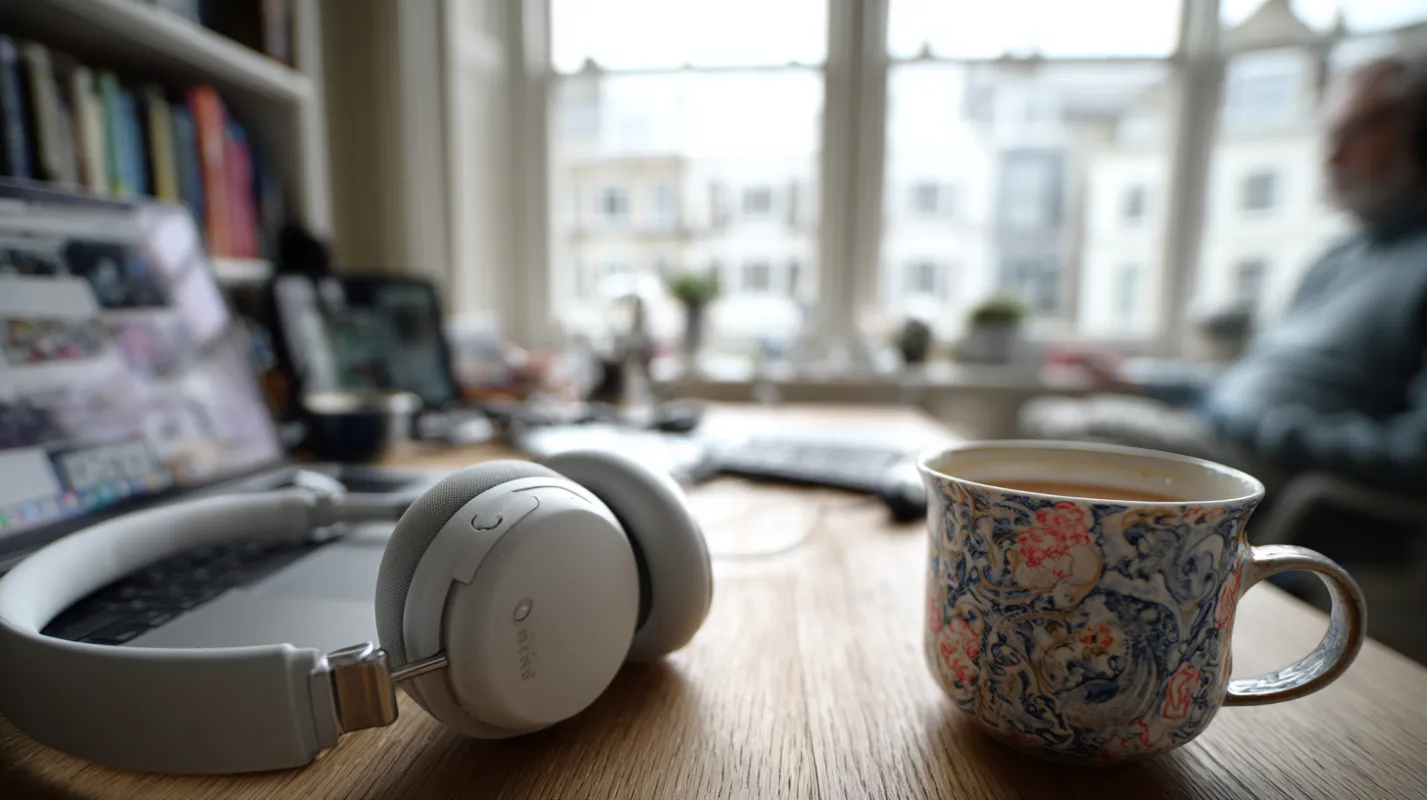
Noise-cancelling headphones address this directly. They reduce the volume and unpredictability of background noise, allowing the wearer to focus on the task in front of them.
Active Versus Passive Noise Cancellation
Passive noise cancellation is simply physical blocking — the material of the ear cups reduces the amount of sound that reaches the ear. This is what you get with most standard headphones or earplugs.
Active noise cancellation (ANC) uses a microphone and electronic processing to detect background noise and generate a counteracting sound wave that neutralises it. This is particularly effective for consistent, low-frequency sounds like air conditioning, traffic, and office hum.
For most people in office environments, active noise-cancelling headphones provide significantly more relief than passive options.
What to Look For
The most commonly recommended options for workplace use include Sony WH-1000XM series and Bose QuietComfort headphones, both of which have strong ANC, good battery life, and comfortable over-ear designs suitable for all-day wear.
For those who prefer not to wear large over-ear headphones, in-ear options such as Sony WF-1000XM series or Apple AirPods Pro also offer effective noise cancellation in a less conspicuous form.
For purely sensory reasons — where the goal is blocking sound rather than listening to audio — loop earplugs or specialist sensory ear defenders designed for autism or sensory processing differences may be more appropriate and are often more affordable.
Using Headphones at Work
Some workplaces have informal norms around headphone use that can make employees hesitant to wear them openly. It is worth establishing — ideally as a formal reasonable adjustment — that wearing noise-cancelling headphones is a recognised accommodation and that the employee should not have to justify their use to colleagues.
For team communication, a simple agreement can help: headphones on means the person is focused and should not be interrupted except for urgent matters; a visible signal or a message on a collaboration tool like Teams or Slack can be used to indicate availability.
Access to Work Funding
Noise-cancelling headphones are one of the most commonly funded items through Access to Work, the UK Government scheme that pays for practical workplace support for people with disabilities and health conditions, including neurodivergent conditions.
If you are employed or self-employed and your condition affects your ability to work, you may be eligible to have noise-cancelling headphones funded entirely or significantly subsidised through Access to Work. You do not always need a formal diagnosis to apply.